I am the end and the beginning
Jean-Baptiste Clamence, the narrator of Albert Camus's The Fall, announces himself as "the end and the beginning" — a self-appointed prophet who, after a life of failed escapes, has discovered a definitive solution to the human torment of being judged without a law. This declaration, made in his Amsterdam room as he lies feverish, caps his transformation from a Parisian lawyer into a judge-penitent, a figure who claims to have found the only way to silence the laughter that has pursued him since the night he heard a mysterious laugh on the Pont des Arts.
The Context of the Declaration
Clamence makes this pronouncement near the end of his five-day monologue to a silent Parisian lawyer, whom he has drawn into his orbit at the Mexico City bar. He has just finished explaining that the world is a madhouse of judges — Christians and Antichrist alike, all reconciled in the little-ease — and that he alone has found a way out. "Fortunately, I arrived!" he exclaims. "I am the end and the beginning; I announce the law. In short, I am a judge-penitent." The statement is both a claim of authority and a summary of his entire project: to become the master who replaces heaven's law, the one who judges all by first condemning himself.
The Meaning of the Claim
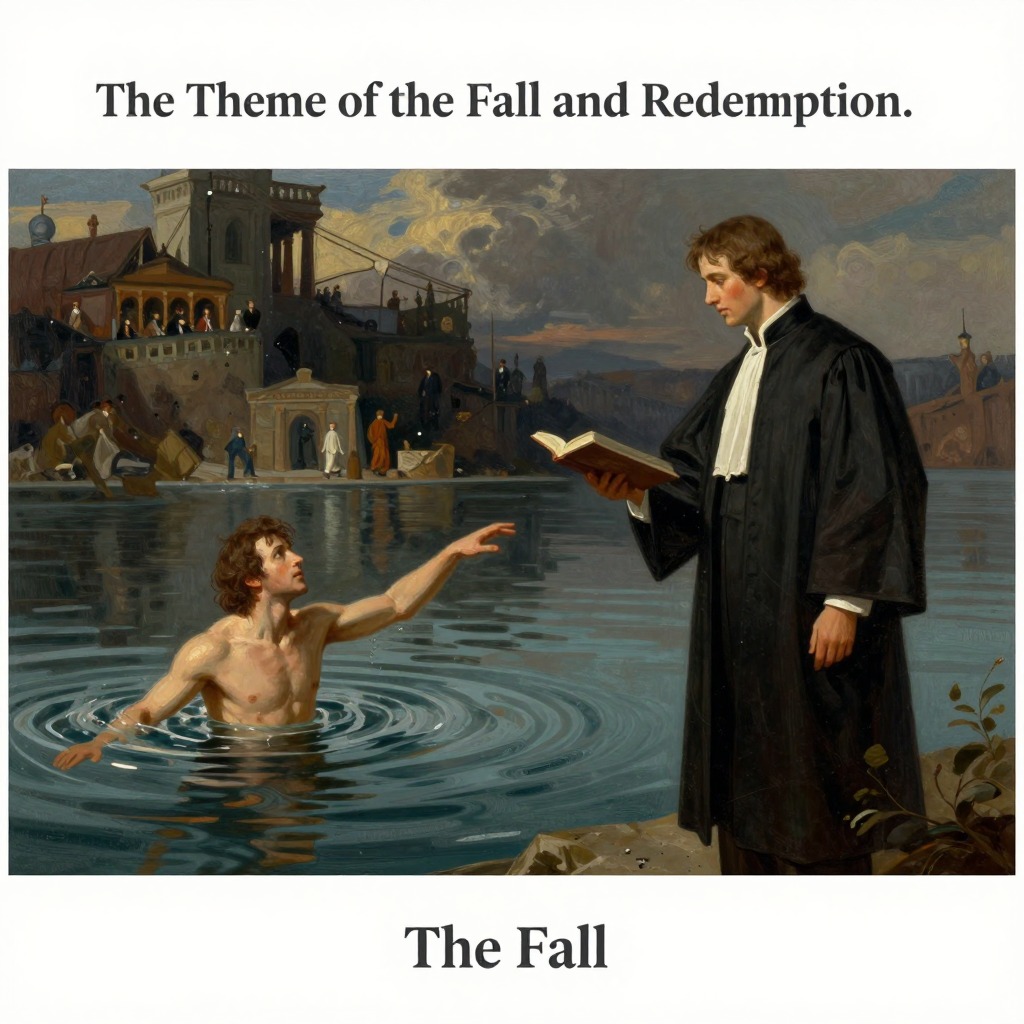
Clamence's self-description as "the end and the beginning" echoes the language of divine sovereignty, but he is an "empty prophet for shabby times," an Elijah without a messiah. He has not found God; he has found a method. The phrase encapsulates his reversal of the Copernican insight: since every judge ends up a penitent, he will become a penitent in order to end up as a judge. By accusing himself publicly and exhaustively, he constructs a portrait that is "the image of all and of no one" — a mask that becomes a mirror for his listener. The more he confesses, the more he earns the right to judge others. He is the beginning because he initiates this new order of universal guilt; he is the end because he has reached the final solution, the only height from which he can dominate forever.
The Significance for Clamence's Project
The declaration marks the culmination of Clamence's long journey from the heights of Parisian success to the fog of Amsterdam. He has tried debauchery, chastity, love, and provocation, but only the judge-penitent's profession has given him the happiness he sought. "I have accepted duplicity instead of being upset about it," he says. "I permit myself everything again, and without the laughter this time." The phrase "I am the end and the beginning" is thus the motto of his new sovereignty: he sits enthroned among his bad angels at the summit of the Dutch heaven, watching the multitude of the Last Judgment ascend toward him, and feels at last that he is being adored.